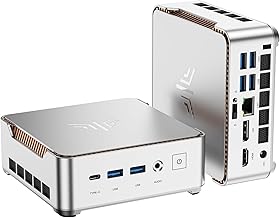
Most x86 boards solder the processor in place for good. The Youyeetoo K1 instead splits its quad-core Intel N100 onto an 82 x 71mm (3.2 x 3.2 inches) compute module that seats into a carrier board much like a stick of RAM, so the silicon can be lifted out and replaced without retiring the rest of the system. The Alder Lake-N chip runs four cores at up to 3.4GHz within a 6W TDP, pairs with up to 16GB of LPDDR5 soldered to the module, and boots from eMMC, SATA, or an M.2 2280 slot wired for PCIe 3.0 x2 NVMe.
The real draw is the 134 x 92mm (5.3 x 3.6 inches) carrier, which exposes more interfaces than most mini PCs bother with. Two Gigabit Ethernet ports, full HDMI plus mini HDMI plus eDP, a USB-C port, two USB 3.0 Type-A and two USB 2.0 Type-A connectors, and 3.5mm audio sit alongside MIPI-CSI and MIPI-DSI lanes for cameras and displays. Beyond that are 27 GPIO pins and dedicated I2C, UART, and SPI headers, dual USB 3.0 and USB 2.0 internal headers, a SATA data and power pair for a separate drive, and onboard NFC support, with Wi-Fi, Bluetooth, and 4G LTE left as optional add-ons through the M.2 2230 slot.
That layout makes the K1 read more like a single-board computer than a sealed appliance, and the N100 is well-traveled territory on Linux by now. The chip handles Debian, Ubuntu, and similar distros with working Quick Sync, AV1 decode, and UHD graphics, and its low power draw has made it a staple of home labs running KVM or Firecracker micro-VMs. With dual Gigabit ports and a fanless 6W envelope, the board is a natural fit for an OpenWrt router or firewall, and Youyeetoo points buyers to an open wiki with drivers and setup guides at wiki.youyeetoo.com. Anyone eyeing the platform longer term can note that the N100's successor, Intel's Wildcat Lake, already landed kernel support in Linux 6.18.
The Youyeetoo K1 is shipping now, starting at $210 (€194) for the 8GB LPDDR5 and 128GB eMMC configuration. A 16GB and 256GB model sells for $260 (€240).