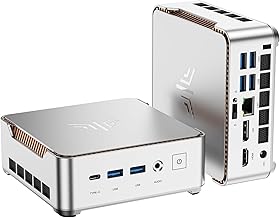
Sipeed and Radxa are building compact local AI inference systems around the Axera AX8860P, a 6nm SoC pairing 16 Arm Cortex-A55 cores with a dedicated NPU rated at 256 TOPS (dense FP4). The first concrete product is Sipeed's MaixStation, a 110 x 110 x 30 mm (4.3 x 4.3 x 1.2 in) mini PC that fits up to 128GB of LPDDR5x on a 256-bit bus delivering 273 GB/s of memory bandwidth, all within a 40-watt thermal envelope powered over 65W USB-C PD. Radxa teased its own "Pocket Supercomputer" built on the same silicon, though details remain sparse. Both companies are well-known in the single-board computer ecosystem, and their involvement signals that this chip is being positioned squarely at the tinkerer and self-hosting crowd, not just enterprise buyers.
The software story is where things get particularly interesting. The AX8860P supports vLLM, SGLang, PyTorch, ONNX, and Hugging Face model formats through a custom backend with kernels written in Axera's AXDSL. Sipeed has committed to open-sourcing those kernels along with the tools needed to write new ones, and says work is underway to open up the broader AX8860 SDK. Axera's Pulsar2 toolchain already has documentation for the AX8860 covering model conversion from ONNX to the chip's native format, and multiple repositories are publicly hosted on GitHub. MaixStation units ship with Debian 13 running Linux 6.18 out of the box, and framework support reportedly extends beyond vLLM, SGLang, and PyTorch to llama.cpp and Ollama as well, with Axera's custom backend handling the actual NPU acceleration underneath while each framework mainly supplies the familiar API surface. That broader compatibility claim hasn't been independently verified yet, and Sipeed has so far detailed support mainly for the specific models used in its own demos. An OpenAI-compatible API layer rounds out the stack, making the platform a plausible drop-in for existing local inference workflows.
In terms of what you can actually run, a single 128GB MaixStation node handles models up to 125 billion parameters (Qwen3.8-Flash-Next 125B), while daisy-chaining two nodes over AXLink gives 256GB of shared memory for DeepSeek V4-Flash 284B, and a four-node "MaixStation Pro" configuration with 512GB can fit DeepSeek V4.1-Flash 552B. Sipeed published Qwen benchmarks showing the 128GB MaixStation slightly outperforming the NVIDIA DGX Spark at the same 128GB memory configuration, with speculative decoding disabled for a fair comparison. Multi-node scaling is also significantly cheaper here: connecting MaixStation units requires only a cable, while linking DGX Spark systems needs a dedicated 200G/400G switch.
Pricing for the MaixStation 32GB starts under $2,000 (€1,840), with the 128GB model coming in under $4,000 (€3,680). For comparison, the NVIDIA DGX Spark 128GB currently sells for $6,950 (€6,394). Sipeed plans to launch on Kickstarter in the coming months and is accepting $30 (€28) reservation deposits through its product page, with a $100 (€92) discount on the final crowdfunding price for those who reserve. These are manufacturer-reported benchmarks on pre-production hardware, so independent validation will be the real test, but the combination of open-source tooling commitments, familiar SBC ecosystem vendors, and competitive pricing makes the AX8860P one of the more compelling new entries in the local AI inference space.