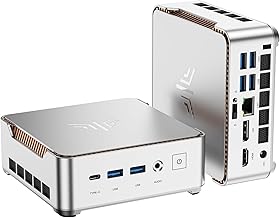
The ECS LIVA Z15 Plus packs dual 2.5 GbE networking, USB4, and up to 64GB of DDR5-6400 into a chassis measuring 12.3 x 12.2 x 4.0 cm (4.83 x 4.8 x 1.67 inches), making it a credible candidate for a compact Linux router, Proxmox node, or pfSense box without the usual single-NIC compromise that plagues most mini PCs in this size class.
Inside, ECS is using Intel's new Wildcat Lake chips across five SKUs, from the Core 3 304 with one P-core and four LP-E cores up to the Core 7 350 with two P-cores, four LP-E cores, a 4.8 GHz boost, and 21 GPU TOPS. The higher-tier configurations carry a 17 TOPS NPU, which is workable for local inference on smaller models through tooling like llama.cpp or Ollama, though it falls short of the 40 TOPS bar Microsoft uses for Copilot+ branding. Wildcat Lake landed in the mainline Linux kernel earlier this year through the same Xe graphics and i915 driver stack already used by Lunar Lake, so distributions running 6.13 or newer should boot cleanly. NPU access takes a newer foundation: kernel-side IVPU patches for Wildcat Lake began merging with Linux 6.16, and Intel has released linux-npu-driver v1.32 on the user-space side, enabling NPU-accelerated inference through frameworks like OpenVINO on sufficiently recent distributions.
Storage and memory expansion stay user-serviceable: a single SODIMM slot accepts up to 64GB of DDR5-6400, and an M.2 2280 slot handles PCIe Gen 4 NVMe. The port array is unusually generous for a 122mm-square box, with one 40 Gbps USB4 Type-C port carrying DisplayPort Alt Mode, a second 20 Gbps USB-C, two 10 Gbps USB-A, four USB 2.0 Type-A, two HDMI outputs, and a 3.5mm jack, all fed by a 19V/90W barrel connector.
ECS has not announced pricing or a launch window for the LIVA Z15 Plus, which was first shown ahead of Computex in Taipei.