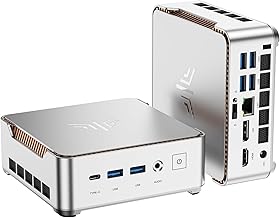
For the first time, Intel is bringing a dedicated NPU to its non-Ultra processor lineup. The six new Intel Core Series 3 "Wildcat Lake" mobile processors are now official, targeting budget laptops, mini PCs, and all-in-one desktops with a combination of modest core counts, integrated AI acceleration, and modern I/O that should make them particularly interesting for compact Linux builds.
The lineup spans from the Core 3 304 up to the Core 7 360, with most models featuring six cores in a hybrid arrangement of two Performance cores and four Low-Power Efficiency cores. The exception is the Core 3 304, which drops to a single P-core. Clock speeds top out at 4.8 GHz on the Core 7 parts, and every chip includes an NPU rated between 15 and 17 TOPS. All six processors share a 15W base TDP with 35W maximum turbo, making them well-suited for fanless or compact enclosures. Connectivity is notably modern for this price tier: WiFi 7, Bluetooth 6, and up to two Thunderbolt 4 ports come standard, a meaningful upgrade over the Alder Lake-N and Twin Lake chips commonly found in today's budget mini PCs.
There are trade-offs to note. Each Wildcat Lake chip has just 6MB of cache and only six PCIe Gen 4 lanes, and memory is limited to a single channel of up to 48GB LPDDR5/X-7467 or 64GB DDR5-6400. Intel positions these as replacements for the Core 100U "Raptor Lake" series from 2024 rather than the ultra-budget N-series line, but the reduced cache, fewer PCIe lanes, and lack of vPro support mean Wildcat Lake reads more like a strategic repositioning than a straightforward generational leap. Intel claims the Core 7 360 delivers up to 2.1x faster productivity performance and 64% lower processor power consumption compared to its Core 7 150U predecessor.
On the open-source software side, Linux support for Wildcat Lake is already taking shape ahead of device availability. Intel has been preparing Wildcat Lake display support targeting Linux 6.18, and OpenGL and Vulkan support via the Iris Gallium3D and ANV drivers has been merged into Mesa 25.1, 25.2, and 25.3. Intel's open-source Linux NPU Driver v1.32.0, published in April 2026, adds Wildcat Lake support through the upstream IVPU kernel accelerator driver, meaning the on-chip AI acceleration should be accessible to Linux workloads on shipping hardware.
Intel says more than 70 systems from Acer, Asus, Dell, HP, Lenovo, MSI, and Samsung will ship with Wildcat Lake processors in the coming months. For the mini PC crowd, these chips could be a welcome addition, combining Thunderbolt 4, WiFi 7, and NPU capabilities at a price point where those features have traditionally been absent.